Tuesday, November 22, 2005

Want to see where I live?


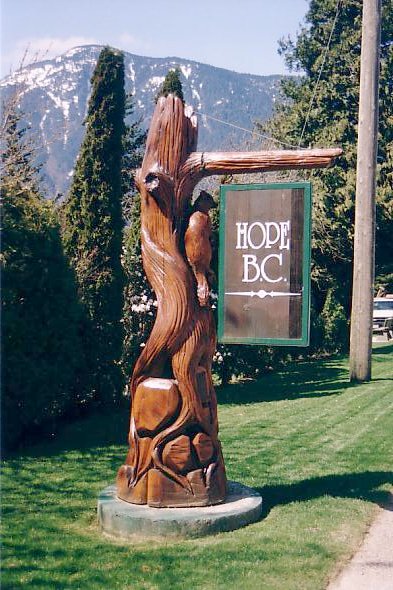
I live in an amazingly beautiful little town. I just came across some photos of it online. Interested is seeing what I see everyday? Check out some pictures from beautiful Hope, BC, Canada here.

Or get a bird's eye view of Hope from here.

Thanks to my new friend Stefan Viveen for leading me to these photo sites...

Monday, November 21, 2005

Ready to be challenged...

Desert Pastor at Paradoxology pours some of the cold water of reality to wake us from a sound spiritual sleep. Here's an excerpt...
"And yet, despite the fact that horrendous acts of violence are being committed against Christians in many places around the world, the topic is scarcely ever found upon the lips of North American believers."
Take the time to visit this post and follow some of the links. It'll wake you up a bit.

Thursday, November 17, 2005

I wouldn't have it any other way.

I think I may have blogged about this before, but it's something that I keep coming back to. It bothers me when people have a neat and tidy faith. When they have an answer for everything. I'm just not sure that's what we are supposed to have. That's why these words from Richard Hall struck home with me. And they've stayed around...

Mark D Roberts considers the book of Job:

"Yet Job is also one of the messiest of all the books of the Bible. It doesn’t lay out a systematic theology of suffering. Rather, it tells a story, the main part of which is a complicated dialogue. There are no easy answers here, and the conclusion of the book comes as quite a surprise. Even after you’ve finished Job, you might not be sure what to make of it."

These words struck a chord with me. I preached tonight at a harvest festival service where the gospel reading was Mark 4: 1-9, the parable of the sower. It’s such a familiar story, I was anxious to find a new angle on it. Not easy, since the gospels record that Jesus gave the explanation, leaving little for the preacher to do!

I found myself asking why it was that Jesus used parables. Mark records Jesus saying that he taught this way that ‘they may be ever seeing but never perceiving, and ever hearing but never understanding’, which is counter-intuitive to say the least. Teaching in order to be deliberately obscure is not teaching! The most common assumption I’ve encountered is that Jesus told simple stories to engage with simple folk, using idioms that they’d understand. But apparently the disciples did not understand. We’ve become so familiar with the parables of Jesus, so used to what we think they mean, that we perhaps find their puzzlement difficult to understand.

Stories, by their very nature, are open-ended. They may have a meaning, but the meaning you take is not always the meaning that’s intended. It’s easy to be suspicious of this. Most of the time we’d rather have clear, consistent and (preferably) concise instructions. Stories offer ambiguity, and that can be hard to deal with. Textbooks for preachers often say something like: “Remember that a parable is not an allegory. It is a story with one clear simple message; the preacher’s task is to offer that message.” But the more I think about that sentiment, the more sure I am that it is rubbish: no story, however simple, has only one clear and unambiguous message.

That’s the point of parables, I reckon.

The truth about God cannot be packaged, systematized and presently neatly and tidily. How could it possibly be? The truth about any of us cannot be told that way, and if it is true of Mr Dai Jones of Swansea, it is all the more surely true of God. No, the truth about God (to borrow a phrase from my friend Kim) must be crept up on, circled around. Parables do not attempt to ‘explain’, but rather offer a truth which must be met and lived with, chewed over and digested. (Horrid mix of metaphors there!) The depth of God’s truth can never be fully plumbed. That’s why Jesus taught in parables.

And that’s why God’s revelation is a man, not a text.

God is bigger than me, He's more than I can grasp. And I'm glad that He is, actually. If I could understand Him completely I don't think that I'd need Him. It's pretty clear to me that understanding the world is beyond me. If He's going to make sense of it (transform it, renew it) then He's going to have to be a bit smarter (more complex, more aware, more powerful) than I am. So it doesn't bother me that much that I don't have all the answers. If anything, it's a relief. Kind of like when I was in grade 3 and the star High School football player defended me from the bully on the bus. I didn't stress over the fact that the football star was stronger than me - and it didn't even occur to me to wonder why he was protecting me. I was just glad that he was.

So here's to a big God. Even when I don't understand all that He does. I wouldn't have it any other way.

Open your eyes...

“Earth’s crammed with heaven,
And every common bush afire with God;
But only he who sees takes off his shoes:
The rest sit round and pluck blackberries.”
-- Elizabeth Barrett Browning

Wednesday, November 16, 2005

The "Kingdom"...

One of the driving metaphors for my life in past few years has been what Jesus called the "Kingdom of God". It has captivated my imagination for several reasons. First, Jesus spent an incredible amount of time talking about it. In fact, when he talks about the "gospel" or the "good news" it's almost always tied to this idea of the Kingdom. Second, it gives me a picture of what it means to be a believer. When you enter into a new kingdom you usually get there by surrender. And your presence implies that you have adopted the authority of this new kingdom as your authority. Finally, it helps me understand what the church is here for. The Kingdom takes root in my own heart and as it begins to shape my life then it begins to spread to others. Tim Challies recently interviewed Derek Webb and they talked a bit about these ideas. Webb says,
"That's really what Jesus' kingdom coming means: 'the being made right of all things.' The way we proclaim that kingdom is by putting our hands to that. So you see someone who is hungry and you proclaim to them a kingdom where there will be no hunger by putting food in their mouth. If someone is ill or sick you proclaim to them the kingdom where there will be no sickness by caring for them or giving them lifesaving drugs. I think that is probably what St. Francis might have meant when he said to 'proclaim the gospel at all times and if necessary use words.' That is his famous quote. I really think that is exactly what he could have meant. We go into culture and proclaim the coming of Jesus' kingdom where all things will be made right by putting our hands to 'the being made right of all things' and of course there is the literal proclamation of his showing up on the scene that we also need to tell people." (Read the whole interview here.)

That's profound. It adds a depth to the meaning of Jesus' command of "Go and make disciples." We proclaim the "kingdom" through what we say - "Jesus died to offer you forgiveness and a way to a relationship with God." We also proclaim it thorough how we live - "This is what it looks like when you surrender to the leadership of Jesus..." This gives fresh meaning to some of the things that Jesus said...
"The time has come, the kingdom of God is near. Repent and believe the good news!" (Mark 1:15)
"Blessed are you who are poor, for yours is the kingdom of God." (Lk. 6:20)
"Heal the sick who are there and tell them, 'The kingdom of God is near you.'" (Lk. 10:9)
Once, having been asked by the Pharisees when the kingdom of God would come, Jesus replied, "The kingdom of God does not come with your careful observation, nor will people say, 'Here it is,' or 'There it is,' because the kingdom of God is within you." (Lk. 17:20-21)

Paul points us that way as well...
"For the kingdom of God is not a matter of talk but of power." (I Cor. 4:20)

I hope the idea of the Kingdom captivates you. It's God at work...and who wouldn't want to be a part of that?

Friday, November 11, 2005

When words are many...

Pat Robertson is at it again. It is a scary thing to presume that you speak for God. Details here. My sister-in-law posts her thoughts here.


"When words are many, sin is not absent, but he who holds his tongue is wise." (Proverbs 19:10)


"My dear brothers, take note of this: Everyone should be quick to listen, slow to speak and slow to become angry, for man's anger does not bring about the righteous life that God desires." (James 1:19-20)

Righteous!

Scot McKinght of Jesus Creed writes a great post of what it means to be "righteous"
"An alarming statement by Jesus: "Unless your righteousness/justice greatly surpasses the righteousness/justice of the Scribes and Pharisees, you will never ever enter into the Kingdom of heaven" (Matt 5:20). Does Jesus really think his followers are to be "better" than the Scribes and Pharisees?"

Read the rest here.

Wednesday, November 09, 2005

The best 9 minutes of your day...

You need to take the time to watch this. It'll take you 8 minutes and 32 seconds. But if you don't have time...then you need to ask yourself why you can't spend eight and a half minutes thinking about something really important.

Lying to Americans...

I finally have it. Proof that Canadians are really mean and very tricky. Of course, it's also proof that Americans are very gullible.

Check out the video here.

Hat tip to Jordon for the link.

Thursday, October 27, 2005

The Beauty of Doubt...

My doubts and struggles have been the greatest gifts that God has given me outside of Jesus. In fact I would almost go so far as to say that every instance of profound spiritual growth that I have had has come out of questioning what I believe. The "church" today often tries to get us to ignore our doubts, to hide our questions. It's done for good reasons, faith isn't about understanding everything. And we have to be able to move on in spite of not having all the answers. But if we cut the questions off too quickly we short-circuit the growing process. It's the struggle of asking that clears our heads to see more clearly.

Brian McLaren puts it all very eloquently in an article that he wrote for Christian Single Magazine called "Doubt: The Tides of Faith". Here's a great excerpt...

When committed Christians come to me to talk about their doubts, one of the first things I say to them is this: doubt is not always bad. Sometimes doubt is absolutely essential. I think of doubt as analogous to pain. Pain tells us that something nearby or within us is dangerous to our physical body. It is a call for attention and action. Similarly, I think doubt tells us that something in us … a concept, an idea, a framework of thinking … deserves further attention because it may be harmful, or false, or imbalanced...

So, if you ask, “Is doubt good or bad?” I’d have to answer, “Yes.” It can go either way. Frederick Buechner expresses this ambivalence about doubt beautifully: “Whether your faith is that there is a God or that there is not a God, if you don’t have any doubts you are either kidding yourself or asleep. Doubts are the ants in the pants of faith. They keep it awake and moving” (Wishful Thinking)...

But again, isn’t that the way it ought to be? Shouldn’t a growing Christian have a growing understanding? Isn’t a vibrant, honest, tested faith worth some intellectual pain? In Finding Faith I talk about this in some detail. I describe how faith seems to grow in a kind of iterative, ascending spiral that has four stages. I call the first stage simplicity, where everything is simple and easy, black and white, known or knowable. Then there’s complexity, where you focus on techniques of finding the truth – since the scenario has gotten more complex. Then there’s perplexity, where you become a kind of disillusioned learner, where you doubt all authority figures and absolutes, where everything seems relative and hazy. I used to call the fourth stage maturity, but a friend pointed out it would be better called humility, because in stage four you come to terms with your limitations, and you learn to live with mystery, not as a cop-out, but as an honest realization that only God understands everything. You carry out of stage four a shorter list of tested and cherished beliefs that you base your life on, and a lot of your previous dogmatisms are now held more lightly. In a sense a person keeps finding faith and then becoming frustrated with it and in a sense losing it, and then finding a better version of it, and so on, maybe like a software upgrade….

That’s what has happened for me. At this stage in my life, I have sifted and re-sifted, and some beliefs I’ve had to release, while others have proven themselves as “keepers.” This is where Jesus is so wonderful and helpful to a person whose faith is in low tide, because Jesus looked at the whole religious system of the Pharisees, which was enormously complex and full of inconsistencies, and in essence, he doubted it. He sifted out a lot of clutter, and boiled all the rest down to some beautiful essentials … like loving God with all your heart, mind, soul, and strength, and loving your neighbor as yourself. I would rather have someone be sure of those few essentials, and live by them, than have them be sure of a million fine points of systematic theology, and not live by Christ’s call to love.


So don't let your doubts and questions deflate you. See them as God calling you deeper. Let Him challenge you to move beyond where you are to where He wants you to be.

Tuesday, October 25, 2005

God and Caesar and me.


One of the greatest issues that I have struggled with in the past few years is how faith and politics mesh in my own personal life, especially as it relates to being a Christian who is an American. I have become convinced that one of the greatest errors of the church is to fall into the trap of believing that all we need to do is to convert the political system and there will be peace on earth. It's way easier to see the problem in the halls of political power than to realize that the problem starts within our own hearts. When it comes to political solutions to spiritual problems we should all be a but wary. Today Will Samson directed me to an awesome post by Dr. Will Willimon that reiterated a lot of what I'm thinking. Willimon writes,

"One day Jesus was walking along and he was asked a political question. 'Jesus, should we pay taxes to Caesar or not?' (Note that Jesus, who appears to be utterly nonchalant, disinterested in politics, did not raise the question of the coin. It was our question.) You know what Jesus did in response to this perfectly clear political question? He asked, 'Who has a coin?' (His pockets were empty.) 'Whose picture is on the coin?'

'Caesar's.'

'Well, it's kind of sad that he needs to put his picture all over money in order to feel better about himself, but go ahead and give it to Caesar since it appears to be his. But you be careful, don't you dare give to Caesar what belongs to God.' And then Jesus proceeds along on his journey.

Could I note just a couple of things there:

First of all, this is our question, not Jesus'. Why do we think politics is so important in the first place? Why has politics become the major source of our meaning and significance in our lives, the solution to every problem?

Point two, note that Jesus' pockets are empty. He seems to be practicing a life of very different 'politics' from ours. When politics gets degraded -- away from the search for the common good -- and becomes a greedy matter of how much money you can keep in my pocket for me, or how we can structure our government to benefit a few, it just may be that politics is something which Jesus has no interest in.

Three, notice that Jesus, when asked about politics, considers it a matter of worship. Whose image do you bow before? What would you sacrifice your children for? What is most important to you? Politics and idolatry are here linked by Jesus.

Four, note that Jesus really doesn't answer the question. He doesn't really define what Caesar owns and what God owns. That means that when it comes to politics, maybe the Christian point of view is to be permanently uneasy, never quite sure, when we're giving to Caesar what really ought to belong to God. This says to me that if Christians are going to get in bed with Caesar, if we are going to be deeply involved in politics, we ought to be tossing and turning all night, the most nervous and uneasy of bedfellows!


That's clear thinking. And I think wisdom. What about you?

Sunday, October 23, 2005

Living with the wind.

Jordon points us to a great article by Jim Wallis as a way to try to explain a little about his own thinking. I appreciated the article. I think that it makes great sense. Wallis writes,

I told the Moms on the Mall that I didn’t want them to waste any valuable time while they were in Washington. Instead, I wanted them to be able to quickly recognize the Members of Congress whom they had come to see. They’re the ones, I told them, who walk around town with their fingers held high in the air, having just licked them and put them up to see which way the wind is blowing. It’s quite a sight—men and women walking all around the Capital grounds with their wet index fingers pointed at the sky. The political leaders are really very good at figuring out the direction of the wind, and are quite used to quickly moving in that direction.It’s not a matter of malice for most of them. In fact, I’ve met quite a few politicians, and many came to Washington because they truly wanted to do the right thing. But after a while, they get entrenched in Washington’s ways, and change seems ever more distant. Power and wealth are the real governors here and people adjust to those realities. Even the ones who still really want to make a difference will tell you they can’t without public backing, and they don’t often find it. Many of us believe that by replacing one wet-fingered politician with another, we can change our society. But it never really works, and when it doesn’t we get disillusioned. We then get tempted to just grumble, withdraw, or give up altogether on ever changing anything. But that’s where we make our mistake.

The great practitioners of real social change, like Martin Luther King Jr. and Mahatma Gandhi, understood something very important. They knew that you don’t change a society by merely replacing one wet-fingered politician with another. You change a society by changing the wind. Change the wind, transform the debate, re-cast the discussion, alter the context in which political decisions are being made, and you will change the outcomes. Move the conversation around a crucial issue to a whole new place, and you will open up possibilities for change never dreamed of before. And you will be surprised at how fast the politicians adjust to the change in the wind. I think that’s what people of faith and conscience are supposed to be—“wind changers.” People motivated by spiritual values that give them a real vision for change are not like those with their fingers up in the air. They already know the direction to head in, and they lead by example. Their commitments, skills, sacrifices, creativity and, ultimately, moral authority are what makes all the difference, and changes the wind.


As I read this intially I thought, "Yes, that's what the church needs to be - wind changers." But as I've reflected I think that what I really believe is just a bit different. It's a subtle difference, but one that is important. Instead of being the "wind changers" we need to be the ones changed by the wind. The Holy Spirit is the change agent in the world. He is the one who Jesus said would
"...convict the world of guilt in regard to sin and righteousness and judgment: in regard to sin, because men do not believe in me; in regard to righteousness, because I am going to the Father, where you can see me no longer; and in regard to judgment, because the prince of this world now stands condemned." (Jn 16:8-11)

Our tendency is always to give our lives to changing the world. Maybe our role is just to give our lives. As we learn to move with the wind then it does have an impact on the rest of the world. The Kingdom of God is very contagious. But we are not the ones who move the wind, it's the wind who moves us. It's not a turning away from the need of the world so much as it is a turning to the Spirit, asking Him to work first and foremost in me. None of this is a poor reflection on Jordon or Jim Wallis, these are men that obviously are responding to the 'Wind" in their own lives. And that "Wind" is speaking to me. Jesus is saying, "Follow me. I'll take care of the world."

Friday, October 21, 2005

The Kingdom at work...

"It became very clear very early that the best disaster-preparedness system the United States has is that of the faith communities, those networks of people already joined together by their love of God and their conviction that lovers of God also practice practical love for their neighbors." - Kay Campbell, The Huntsville Times

Link

Out of the mouths of babes...

A few good ones sent to me by one of my neices...

JACK (age 3) was watching his Mom breast-feeding his new baby sister. After a while he asked: "Mom why have you got two? Is one for hot and one for cold milk?"

MELANIE (age 5) asked her Granny how old she was. Granny replied she was so old she didn't remember any more. Melanie said, "If you don't remember you must look in the back of your panties. Mine say five to six."

STEVEN (age 3) hugged and kissed his Mom goodnight. "I love you so much, that when you die I'm going to bury you outside my bedroom window."

BRITTANY (age 4) had an earache and wanted a painkiller. She tried in vain to take the lid off the bottle. Seeing her frustration, her Mom explained it was a childproof cap and she'd have to open it for her. Eyes wide with wonder, the little girl asked: "How does it know it's me?

MARC (age 4) was engrossed in a young couple that were hugging and kissing in a restaurant. Without taking his eyes off them, he asked his dad: "Why is he whispering in her mouth?"

CLINTON (age 5) was in his bedroom looking worried. When his Mom asked what was troubling him, he replied, "I don't know what'll happen with this bed when I get married. How will my wife fit in?"

JAMES (age 4) was listening to a Bible story. His dad read: "The man named Lot was warned to take his wife and flee out of the city but his wife looked back and was turned to salt." Concerned, James asked: "What happened to the flea?"

And my personal favorite...

"Dear Lord," the minister began, with arms extended toward heaven and a rapturous look on his upturned face. "Without you, we are but dust." He would have continued but at that moment my very obedient daughter (who was listening!) leaned over to me and asked quite audibly in her shrill little girl voice, "Mom, what is butt dust?"

The rumors of my death...

...have been greatly exaggerated. I haven't posted since September 23rd, almost a month ago. I've been asking myself why and I don't really have a good answer. I guess there are times when you just have nothing to write. I have been thinking quite a bit though, and have found some excellent people to stretch me and help me understand in a deeper way what it means to follow Jesus. If you're interested here's a few suggestions that have been great for me...

Scot McKnight of Jesus Creed has two great series of posts - one on "What is the Gospel?" and a second on "Doctrinal Statements and the Emerging Movement". I had written something in line with the series on Doctrinal Statements here. I really appreciate what Scot brings to the table. He is solidly Biblical, but willing to ask hard questions.

Also I read an incredible book on vocation/calling by Parker J. Palmer called Let Your Life Speak. It is one of those books that continues to impact you for weeks after you put it down.

And there is a lot more percolating through this old head of mine. I'll try to put pen to paper (or finger to keyboard) and share some more of it with you in the coming days. Maybe my blogging sabbatical is over. Time will tell.

Friday, September 23, 2005

Building up the church?


Never thought about doing it this way. The First Church of Lego. See here for more.

Saturday, September 10, 2005

Reading the Bible as a whole

Here's a great quote about how we need to read the Bible (or let the Bible read us) from J.I. Packer. Thanks to Milton Stanley at Transforming Sermons for sharing it (he gives credit to Mark Loughridge). It's definitely worth not only reading, but applying.

". . . we are not in the habit of treating it as a book - a unit - at all; we approach it simply as a collection of separate stories and sayings. We take it for granted that these items represent either moral advice or comfort for those in trouble. So we read the Bible in small doses, a few verses at a time. We do not go through individual books, let alone the two Testaments, as a single whole. We browse through the rich old Jacobean periods of the King James Version or the informalities of the New Living Translation, waiting for something to strike us. When the words bring a soothing thought or a pleasant picture, we believe the Bible has done its job. We have come to view the Bible not as a book, but as a collection of beautiful and suggestive snippets, and it is as such that we use it. The result is that, in the ordinary sense of 'read,' we never read the Bible at all. We take it for granted that we are handling Holy Writ in the truly religious way, but this use of it is in fact merely superstitious. It is, I grant, the way of natural religiosity. But it is not the way of true religion.

God does not intend Bible reading to function simply as a drug for fretful minds.

The reading of Scripture is intended to awaken our minds, not to send them to sleep. God asks us to approach Scripture as his Word - a message addressed to rational creatures, people with minds, a message we cannot expect to understand without thinking about it. . . .the Bible comes to us as the product of a single mind, the mind of God. It proves its unity over and over again by the amazing way it links together, one part throwing light on another part. So we should read it as a whole. And as we read, we are to ask: What is the plot of this book? What is its subject? What is it about? Unless we ask these questions, we will never see what it is saying to us about our lives.

When we reach this point, we shall find that God's message to us is more drastic and at the same time more heartening than any that human religiosity could conceive."
Often we treat the Bible as nothing more than a glorified "Daily Bread" that contains our inspirational thought or spiritual challenge for the day. Would that we would let the Bible be what it is and unleash the Spirit to use it to transform the core of who we are.

Link

Friday, September 09, 2005

The Sadness of Joy...

I've often wondered why Jesus wept at Lazarus' tomb. I've heard many sermons on it and none of them have ever really settled the issue. Jesus, of all people, knew exactly what was going to happen. He even knew that through His death and resurrection that death would be defeated. Shouldn't this corpse walking out of a tomb been a moment of victory? Didn't Jesus realize that it would foreshadow His own resurrection? Shouldn't He have been filled with anticipation as people saw the power that God has over death? And yet there it is in black and white, the easiest Bible verse to memorize, "Jesus wept." (Jn. 11:35)

I think that I have a better understanding of this now. It happened last week as I presided over a funeral of our friend Janice. Janice went home to heaven at age 42, leaving behind 3 children: Ryan, 20, Rob, 19, and Heather, 18. Janice has fought cancer for the last 18 years. We have known her for the last 2 years, and her kids have spent time living with us while she was in the hospital. (More info on that here.)

I had worked hard on my comments for her funeral. Although it was sad to say goodbye (even temporarily) to someone so young, my hope was that the funeral could celebrate the end to her battle with cancer. A battle that was won by Jesus. In order to help keep that focus clear in the service, I wanted to end my comments by reading from I Corinthians 15:50-58 from "The Message".

50I need to emphasize, friends, that our natural, earthy lives don't in themselves lead us by their very nature into the kingdom of God. Their very "nature" is to die, so how could they "naturally" end up in the kingdom of Life?
51But let me tell you something wonderful, a mystery I'll probably never fully understand. We're not all going to die--but we are all going to be changed. 52You hear a blast to end all blasts from a trumpet, and in the time that you look up and blink your eyes--it's over. On signal from that trumpet from heaven, the dead will be up and out of their graves, beyond the reach of death, never to die again. At the same moment and in the same way, we'll all be changed. 53In the resurrection scheme of things, this has to happen: everything perishable taken off the shelves and replaced by the imperishable, this mortal replaced by the immortal. 54Then the saying will come true:

Death swallowed by triumphant Life!
55Who got the last word, oh, Death?
Oh, Death, who's afraid of you now?

56It was sin that made death so frightening and law-code guilt that gave sin its leverage, its destructive power. 57But now in a single victorious stroke of Life, all three--sin, guilt, death--are gone, the gift of our Master, Jesus Christ. Thank God!
58With all this going for us, my dear, dear friends, stand your ground. And don't hold back. Throw yourselves into the work of the Master, confident that nothing you do for him is a waste of time or effort.
That should bring people to the joyous point of remembering that death's hold on us is only temporary. The last word belongs to Jesus. Janice's battle is over. She has been victorious. And verse 58 tells us to throw ourselves into Christ's mission, knowing that He can complete all that He has set out to do. I envisioned reading the passage with power, confessing with confidence the joy that we have from Christ's defeat of death.

But what actually happened was that as I read I became so overwhelmed with sadness that I could barely finish the passage. And it was at that moment that I realized something. Sin, it's hold on us, and the ramifications it has for our lives is something so terrible that we should not gloat in our victory. Yes, Jesus has the last word, and in that we can have hope. But our rebellion against God has filled this world with such pain and misery that at times our joy has to be laced with sadness. That's part of living in a fallen world - a situation that will not be remedied until the Kingdom comes in all its fullness. Having a taste of what Jesus offers helps us to see the horrible reality of what the world has a little more clearly. Seeing what is to come brings us joy, but also overwhelms us with sadness for what is.

It's a bittersweet feeling that my friend Matt Auten has appropriately named "the stab". That sense of happy sadness or painful joy that reminds you of the celebration to come while showing you the desolation of the world all around you (and even in you).

So I think that's why Jesus wept. Yes, He knew the reality of the Kingdom of Heaven. He knew the power and promise of God. But that knowledge only made Him more susceptible to the pain of the death of Lazarus and the sadness of those who loved him. And by experiencing that He was able to transform it into resurrection joy. As we know the joy of God better it emotionally stretches us to higher heights. But the view from those heights constantly reminds us of the depth to which sin will carry us. Our call is to embrace the sadness and let God transform it in and through our lives.

So it's important to remember God's words through Paul...

Death swallowed by triumphant Life! Who got the last word, oh, Death? Oh, Death, who's afraid of you now? ... With all this going for us, my dear, dear friends, stand your ground. And don't hold back. Throw yourselves into the work of the Master, confident that nothing you do for him is a waste of time or effort.

Wednesday, September 07, 2005

Don't ya just love old George

Mildred, the church gossip, and self-appointed monitor of the church's morals, kept sticking her nose into other people's business. Several members did not approve of her extra curricular activities, but feared her enough to maintain their silence. She made a mistake, however, when she accused George, a new member, of being an alcoholic after she saw his old pickup parked in front of the town's only bar one afternoon. She emphatically told George and several others that everyone seeing it there would know what he was doing. George, a man of few words, stared at her for a moment and just turned and walked away. He didn't explain, defend, or deny. He said nothing. Later that evening, George quietly parked his pickup in front of Mildred's house...walked home....and left it there all night.

Sheer power


A picture of Katrina. There is power which we can't even begin to comprehend.